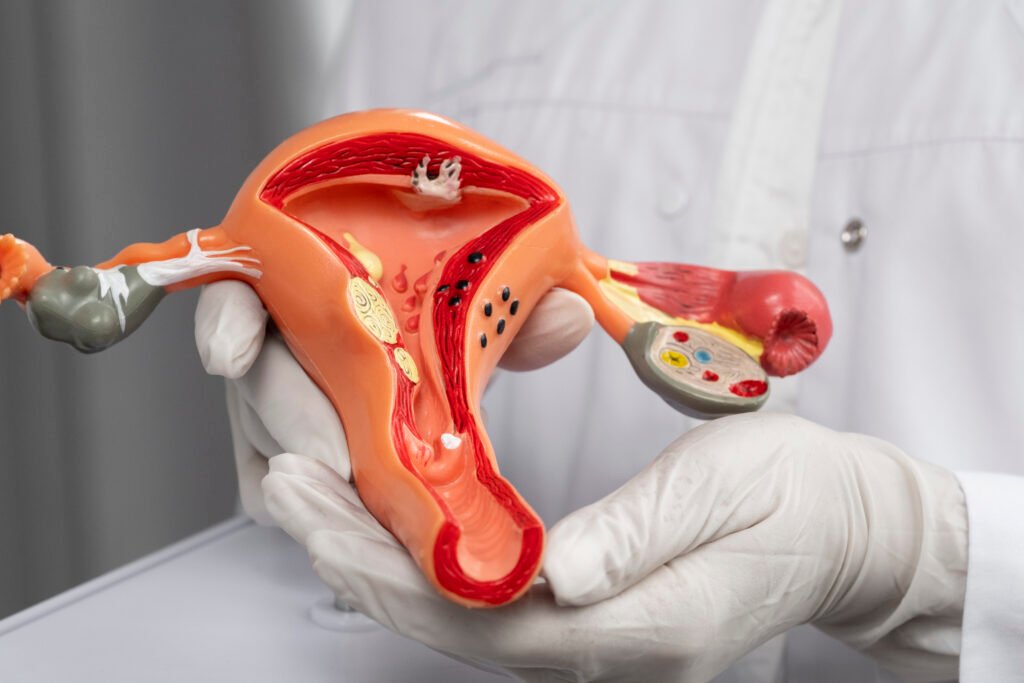
Fighting Cervical Cancer: Prevention is Power
ANATOMY
- Here’s a structured breakdown of the anatomy of the cervix .
Anatomy of the Cervix
1. Overview
The cervix is the lower cylindrical part of the uterus.
It connects the uterine cavity to the vaginal canal.
It measures approximately 2.5–3.5 cm in length.
2. Parts of the Cervix
Endocervix: Inner canal leading to the uterine cavity; lined by columnar epithelium.
Ectocervix (Portio Vaginalis): Outer part projecting into the vagina; covered by squamous epithelium.
Transformation Zone: Area where columnar and squamous epithelium meet (squamocolumnar junction); common site for cervical cancer.
3. Cervical Os
External Os: Opening into the vagina.
Internal Os: Opening into the uterine cavity.
4. Cervical Epithelium
Squamous epithelium: Covers the ectocervix.
- Columnar epithelium: Lines the endocervical canal
- Squamocolumnar junction (SCJ): Dynamic zone; location shifts with age and hormonal changes.
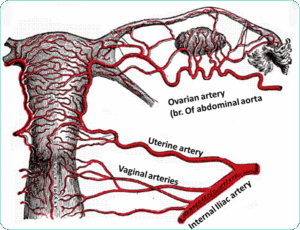
5. Blood Supply
Primarily from the uterine artery (branch of the internal iliac artery).
- ascending branch of vaginal artery
- Venous drainage mirrors the arterial supply.
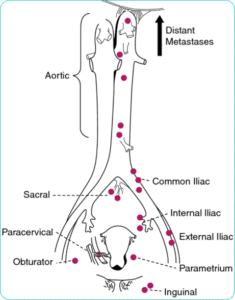
6. Lymphatic Drainage
a) Drain principally into PARACERVICAL and PARAMETRIAL nodes
b) Then into OBTURATOR , INTERNAL ILIAC,EXTERNAL ILIAC and COMMON ILIAC NODES
c) Finally into PARA AORTIC LYMPH NODES
7. Nerve Supply
Derived from the inferior hypogastric plexus.
Pain fibers from the cervix follow the pelvic splanchnic nerves (S2–S4).
8. Histological Layers
Mucosa (epithelial lining)
Muscularis (smooth muscle)
Adventitia (connective tissue)
The lower part of the cervix projects into the anterior
wall of the vagina, which divides it into
- supravaginal part
- vaginal part
1) supravaginal part—related
a. Anteriorly to the bladder.
b. Posteriorly to the rectouterine pouch,
c. On each side, to the ureter and to the uterine
artery, embedded in parametrium.
2) vaginal part
Relations:
a) Anteriorly: Anterior fornix of
vagina
b) Posteriorly: Posterior fornix
c) On each side: Lateral fornices
EPIDEMIOLOGY AND RISK FACTOR
📍 Cervical Cancer: A Silent Crisis That Needs Urgent Action
Worldwide, cervical cancer remains the eighth most common cancer by incidence and the ninth most common cause of cancer mortality, with over 662,301 women globally developing this tumor as reported in 2022 and 348,874 dying of the disease every year.
Cervical Cancer in India:
Cervical cancer remains one of the most pressing yet preventable health issues affecting women in India today. According to the GLOBOCAN 2022 estimates, India reported around 127,600 new cases of cervical cancer in a single year, making it the second-highest in the world after China. Even more alarming is the estimated 79,900 deaths annually—highlighting a deep gap in early detection and timely treatment.
While we’ve seen some decline in age-standardized rates over the years, the absolute numbers are still rising due to our growing population. What’s concerning is that cervical cancer continues to be the second most common cancer among Indian women—despite being one of the most preventable and treatable cancers when caught early.
🔬 Why Is This Still Happening? (ETIOLOGY)
Several factors contribute to this ongoing burden:
- Low awareness and screening: Less than 2% of Indian women aged 30–49 have ever been screened for cervical cancer.
- HPV infection is the leading cause, especially types 16 and 18, which are responsible for about 70% of all cases.
- Cultural taboos, lack of access to healthcare, early marriage, and poor menstrual hygiene also play a role.
- Rural and underserved regions—especially in the Northeast—continue to bear the brunt of the disease.
| Key Point | Takeaway |
|---|---|
| Global burden | ~660K cases, ~350K deaths (2022), mostly in LMICs |
| Socioeconomic disparities | Low-HDI countries bear a disproportionate burden |
| Rate trends | AS rates declining, but total cases rising |
| Future risk | 2030: ~760K cases, ~411K deaths if unchanged |
| HPV & HIV link | HPV ~99% of cases; HIV amplifies risk |
| Subtypes | SCC 83%, adenocarcinoma ≈ 12% |
| WHO targets | Vaccination + screening + treatment are critical |
